
BlushX
Shamim RezaSocial
2.618.00 Reviews
- Version
- 1.2.0
- Installs
- 10.00K
- Age Rating
- Mature 17+
Screenshots


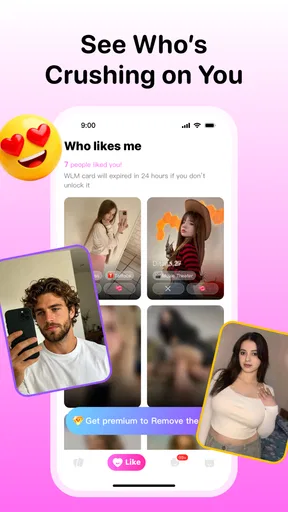

Our Review of BlushX
 Analysis by Appyee
I approached BlushX as a social app for people who want to meet, chat with, and possibly date local connections rather than simply scroll through a general-purpose social feed. My first impression was that its appeal is easy to understand: the purpose is direct, the audience is mature, and the experience is built around personal interaction. That focus can feel refreshing when broader social networks become noisy or when a dating app feels overloaded with extra tools.
At the same time, a focused idea is not automatically a lasting habit. A connection app has to keep giving people a reason to return after the initial curiosity disappears. That usually depends less on a clever first session and more on the quality of available conversations, the effort required to maintain a profile, and whether local activity feels consistent. My view of BlushX is therefore mixed but practical: it may be worth trying for adults who want a simple local discovery space, while people seeking a mature, highly established dating ecosystem should approach it with measured expectations.
What using BlushX feels like beyond the first impression
BlushX sits in the social category and is developed by Shamim Reza. It is free to install, carries a Mature 17+ age rating, and runs on Android devices using version 8.0 or later. Those details make it relatively approachable from a device-compatibility perspective, especially for someone using an older phone who does not want to replace hardware just to test a new social service.
The app’s central promise is local connection. That changes how I judge it. I am not looking for an endless content feed, a productivity system, or a game loop that rewards daily repetition. I am looking for a useful path from discovering someone nearby to starting a comfortable conversation. Every screen and interaction matters because unnecessary friction can make a user leave before a real exchange begins.
During the first week, the strongest appeal is the clarity of the purpose. Someone who has recently moved, works remotely, has a small social circle, or simply wants to meet people outside an existing routine can understand why this kind of app might help. It offers a more intentional starting point than waiting for a chance encounter, and it can be less intimidating than approaching strangers in person.
That does not mean every profile or chat will lead somewhere. Local discovery products are naturally dependent on who is active in a particular area. A user in a busy city may have a different experience from someone in a smaller community, and even in a populated area, the useful audience may be online at different times. I would treat the first week as a trial of local activity, not as proof that the app will immediately produce a relationship.
The first-week routine I would recommend
I would not begin by spending a long evening trying to make the perfect profile. A better approach is to create a clear, honest presentation, look through the available local options, and test whether starting a conversation feels natural. The goal is to learn whether BlushX fits your social intention: dating, meeting new people, or simply opening a door to local interaction.
One useful habit is to judge conversations by their effort balance rather than by how quickly someone responds. A short exchange can be promising if both people contribute, while a long thread can still feel empty when one person carries it. This is a small but important distinction because a connection app can consume time without creating meaningful progress.
I would also keep the first conversations within the app until trust develops. Avoid rushing into personal details, financial requests, or arrangements that make you uncomfortable. That advice is not unique to BlushX, but it matters especially when an app’s purpose is to turn online discovery into real-world contact. The convenience of local matching should never replace ordinary caution.
For a person deciding whether to keep using it, the first-week test is simple: are there enough people who seem relevant to your goal, do conversations begin without excessive effort, and do you feel comfortable returning? If the answer is no across the board, more time may not solve the underlying mismatch.
How it compares with familiar alternatives
Compared with a general social network, BlushX has a narrower purpose. That can be an advantage because users are more likely to be there for personal connection rather than news, entertainment, or public posting. The trade-off is that a narrower audience gives you fewer reasons to browse when you are not actively looking to meet someone.
Compared with established dating platforms, the main question is depth and consistency. Larger alternatives often benefit from a broader pool and more familiar routines, which can make them a better choice for users who want extensive discovery tools or a well-developed dating culture. BlushX may be more appealing to someone who prefers a less crowded starting point and wants to focus on local contact without feeling buried in a huge service.
It also differs from messaging apps because the connection begins with discovery rather than with people you already know. That makes it useful for expanding a circle, but it also introduces uncertainty. A messaging app is usually better once you already have a trusted contact; BlushX is relevant earlier, when you are deciding whom you might want to know.
My practical comparison is this: use BlushX when the local angle and focused purpose matter more than a massive user base. Choose a larger alternative when you need a high volume of potential matches, a more predictable stream of activity, or a service with more established habits in your area.
Whether the app keeps earning attention month after month
The first-month question is not whether BlushX can be interesting. It is whether it can become useful without demanding constant effort. Social and dating apps often lose their shine when every return visit feels like repeating the same search, answering the same opening questions, or sorting through conversations that never move forward.
For me, recurring value would come from three things: a changing pool of relevant local people, conversations that develop naturally, and a manageable routine. If those elements are present, I can imagine checking the app periodically rather than treating it as a one-time experiment. If they are missing, the app becomes another notification source competing for attention.
A realistic everyday scenario would be someone who finishes work, has recently relocated, and wants to meet people without committing to a formal event. They might open BlushX for a short session, review a few local profiles, reply to one ongoing conversation, and then leave. That is a healthier long-term pattern than spending hours swiping or chatting with everyone at once. The app works best when it supports a specific social goal rather than becoming the goal itself.
Another use case is a person who is comfortable meeting people online but wants to keep social discovery geographically relevant. Local focus can reduce the frustration of building a promising conversation with someone who lives too far away to meet. Still, local does not automatically mean compatible. I would use location as a practical filter, not as a substitute for shared interests, communication style, or mutual respect.
Small routines that improve the experience
My strongest recommendation is to return with a purpose. Before opening the app, decide whether you are checking for new people, replying to an existing conversation, or deciding whether a connection deserves a next step. This prevents passive browsing from taking over and makes it easier to notice whether the service is actually helping.
It is also worth keeping your profile current without constantly rewriting it. A clear description of what you want can save time by discouraging mismatched conversations. The important balance is to be specific enough to set expectations while leaving room for a normal conversation. Overly polished self-presentation can make a social app feel like a performance rather than a meeting place.
A less obvious trade-off is the relationship between availability and privacy. Being open enough to attract conversation may also reveal more about your routine than you intended. I would avoid publishing details that identify your home, workplace, or daily schedule. Local discovery is useful, but it should not turn your profile into a map of your private life.
Finally, I would set a personal stopping rule. If a conversation becomes repetitive, one-sided, or uncomfortable, ending it is better than maintaining it out of politeness. This protects the time and attention that a long-term social app can quietly consume.
What creates fatigue over time
The biggest source of fatigue is uncertainty. You may not know whether a new connection is genuinely interested, whether a conversation will continue, or whether the local audience will remain active. That uncertainty is part of meeting people online, but it becomes tiring when the app does not produce enough worthwhile exchanges to balance the effort.
Repetition is another problem. Similar introductions, vague intentions, and conversations that stop after a few messages can make the experience feel like administrative work. I would not blame BlushX for every failed interaction, because users create much of the social quality themselves. However, the app’s lasting value depends on making it easy to identify promising exchanges and move away from unproductive ones.
There is also a tension between free access and optional spending. BlushX is free, but in-app purchases range from $2.99 to $199.99 per item. That is a wide enough range that I would be careful before buying anything. I would first use the core experience long enough to decide whether local activity and conversation quality justify spending. A purchase should solve a clear problem for you, not simply respond to pressure created by the app’s design.
Because the service is rated 2.6 on average from around 33 ratings and has around 18 written reviews, I would read the public reaction as a reason to test it personally rather than as a definitive verdict. The audience represented by those figures is limited, but the rating still suggests that expectations should be realistic. I would not install it assuming that every part of the experience will feel polished or equally useful for every user.
Maintenance, privacy, and practical effort
Maintaining a profile does not need to become a second job. I would review the profile after the first few conversations, remove wording that attracts the wrong kind of attention, and keep expectations clear. Beyond that, constant editing can become counterproductive. The best profile is usually understandable and genuine, not endlessly optimized.
Conversation maintenance deserves more attention than profile maintenance. If you are interested in someone, ask questions that allow a real answer instead of relying on repeated greetings. If the exchange remains vague, suggest a low-pressure next step only when you are comfortable. If the other person avoids clarity or pushes boundaries, that is useful information and a reason to disengage.
For safety, I would choose public meeting places, tell a trusted person where I am going, and avoid treating an online connection as verified simply because the conversation feels pleasant. I would also be cautious with requests for money, emergency help, private documents, or unusual personal favors. A social app can introduce people; it cannot guarantee their intentions.
The app is most suitable for adults who understand those boundaries and are willing to manage their own pace. It is not the right choice for someone who wants a fully guided matchmaking process, guaranteed identity checks, or a social environment that requires almost no judgment from the user. Those people may be better served by a larger or more structured alternative.
Version, audience, and staying power
The current version is 1.2.0, so I would think of BlushX as an app that may still be finding its shape rather than as a completely mature destination. That does not make it unusable, but it does affect how much patience I would bring to the experience. Early or developing services can improve, yet users also have to tolerate unevenness while deciding whether the direction is promising.
The age rating of Mature 17+ is important when considering who should use it. This is not an app I would recommend casually to younger users, and adults should still apply judgment because an age label does not remove the risks of online interaction. The intended audience is people who can make independent decisions about contact, privacy, and meeting arrangements.
With over 10 thousand installs, BlushX has reached an initial audience, but I would not assume that this translates into strong activity in every location. The meaningful question is not the broad install figure; it is whether people near you are active and aligned with what you want. Local relevance matters more than a headline number for this kind of service.
Who should keep it installed
I would keep BlushX installed if I were an adult looking for local social or dating connections, comfortable with a focused app, and willing to evaluate conversations carefully. It can be especially useful for someone rebuilding a social circle after a move, trying online dating for the first time, or wanting an alternative to the most familiar platforms.
I would probably skip it if I needed a large, consistently active community immediately, disliked initiating conversations, or wanted a service to do most of the compatibility work for me. I would also skip it if the local results were thin during the first few sessions. No amount of profile polishing can create a suitable nearby audience where one is not available.
The app is also a poor fit for anyone who treats every match as an obligation. Its value depends on selective attention. If you feel compelled to answer everyone, remain in every conversation, or spend money before understanding the basic experience, the service can become stressful quickly.
My long-term verdict
BlushX earns a trial more easily than it earns permanent space. Its focused local-social idea is understandable, its free entry removes an initial barrier, and its compatibility with Android 8.0 or later makes it accessible to many users. I can see why someone would enjoy the first week, particularly when they want to meet people outside an established circle.
Whether it lasts depends on the quality of the local audience and the user’s ability to keep the routine deliberate. I would not open it every day by default. I would check it when I had a clear reason, protect my privacy, avoid rushing into paid items, and judge the app by the quality of actual conversations rather than by the excitement of finding new profiles.
My recommendation is therefore cautious but positive for the right person: try it as a focused experiment, not as your only route to connection. If it produces respectful, balanced conversations and a few realistic opportunities to meet locally, it can justify a place in your monthly routine. If it mainly produces repetition, uncertainty, or pressure to spend, uninstalling it is the sensible choice. The lasting value is not novelty; it is whether BlushX consistently helps you build better real-world connections with less effort than your usual alternatives.
Verdict
Strengths of BlushX
- Intuitive interface makes browsing and discovering profiles straightforward.
- Private messaging supports direct conversations with potential matches.
- Profile customization helps users show their personality and preferences.
- Search and discovery tools make it easier to find compatible people.
- Regular updates can improve performance and introduce useful new features.
Limitations of BlushX
- Some features may require a paid subscription or in-app purchases.
- The quality of matches can vary depending on the number of active users nearby.
- Users may encounter incomplete, outdated, or misleading profile information.
- Privacy settings should be reviewed carefully before sharing personal details.
- Notifications can become distracting if message and activity alerts stay enabled.
Similar Picks in This Category
View All
Meta Platforms, Inc.4.6

Instagram4.0

Likee-Live, Chat & Party Games
Likeme Pte. Ltd.4.4

Facebook Lite
Meta Platforms, Inc.4.5

TikTok - Videos, Shop & LIVE
TikTok Pte. Ltd.4.0

Moj: Free Short Drama & Reels
ShareChat4.1
Frequently Asked Questions
What is BlushX and what can I use it for?
BlushX is a beauty-focused mobile app designed to help users explore makeup looks, discover blush colors, and experiment with different styles. Depending on the version available in your region, it may include product inspiration, shade recommendations, tutorials, or visual tools for comparing looks. It is best suited to people who enjoy beauty content and want ideas before choosing a blush or creating a new makeup routine.
Is BlushX free to download and use?
BlushX may be available as a free download, but some features, content, or tools can require in-app purchases or a subscription. Before installing, check the official Google Play Store or App Store listing for the current pricing details, trial conditions, and available plans. Also review the subscription terms carefully, because free trials can automatically renew unless they are canceled through your device settings.
Does BlushX work on both Android and iPhone?
BlushX availability depends on the developer and the country associated with your app store account. If an official Android version is published, it should be downloaded through Google Play, while iPhone and iPad users should use the Apple App Store. Check the required operating-system version and device compatibility before downloading, especially if you use an older phone or tablet.
Does BlushX require an account or access to personal information?
Some BlushX features may work without registration, while personalized recommendations, saved looks, purchases, or synchronization can require an account. During setup, review every permission request and only provide access that is necessary for the feature you want to use. If the app requests photos, camera access, or other personal information, read its privacy policy to understand how that data is collected, stored, and used.
Is BlushX suitable for beginners, and how easy is it to use?
BlushX is generally intended to be approachable for users with different levels of makeup experience. Beginners can use it for inspiration, shade ideas, and simple guidance, while more experienced users may appreciate the ability to compare styles or explore new combinations. Keep in mind that digital recommendations cannot perfectly reproduce real-life lighting or every skin tone, so test products carefully before making a purchase.
